01Medical Dermatology
Rosacea
Long-term control of facial redness, bumps and sensitivity, with treatment tailored to your type of rosacea.
- Duration
- 30–45 min consultation
- Downtime
- None / 2–5 days after laser
- Sessions
- Treatment + maintenance
01What is the treatment?
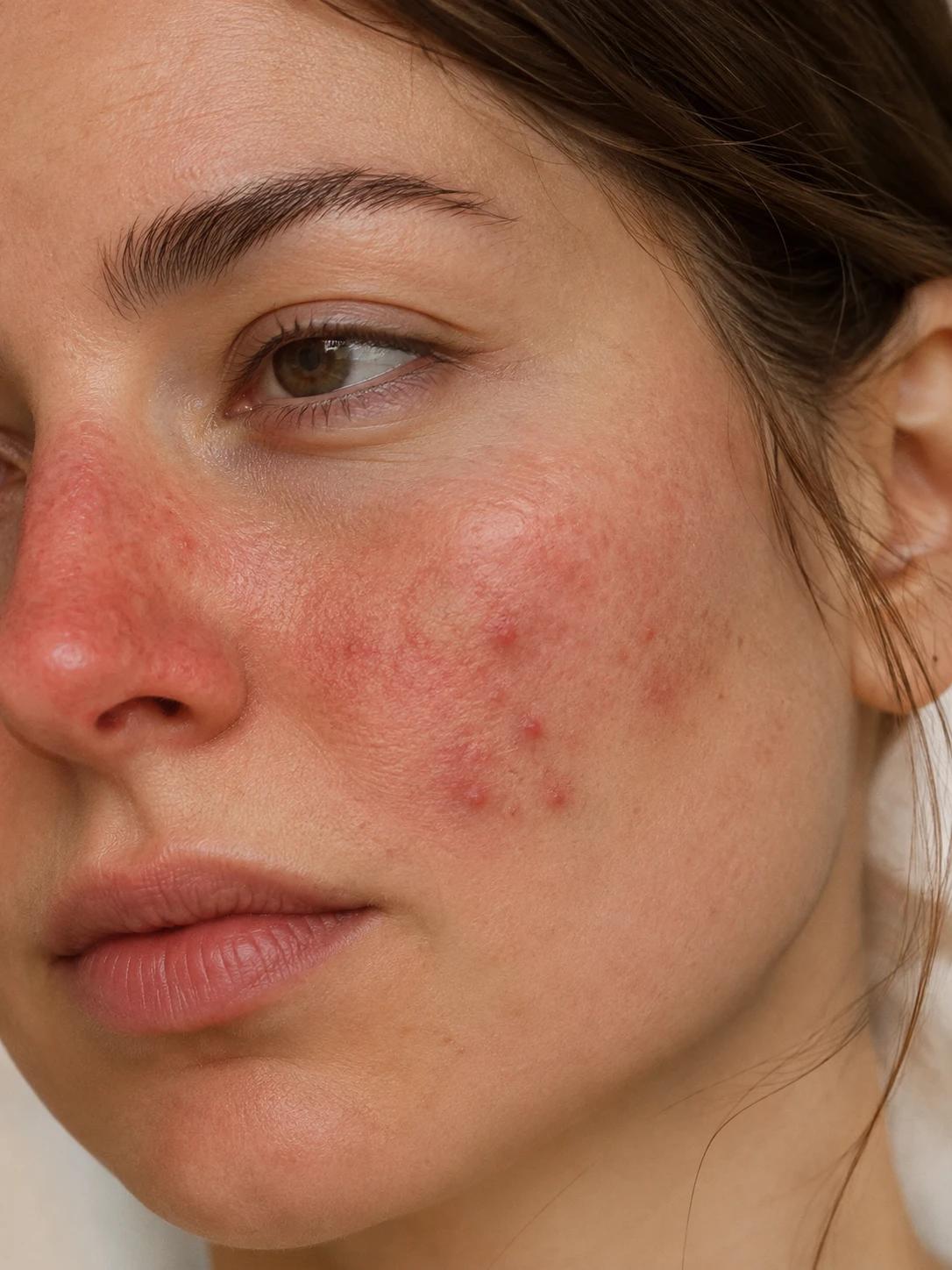
Rosacea is a chronic inflammatory condition of the facial skin, marked by persistent redness, flushing, visible vessels and sometimes bumps and pustules. It cannot be cured permanently, but it can be controlled very well.
02Who is it suitable for?
- People with persistent facial redness
- Patients with sensitive, reactive skin
- Those with bumps and pustules on cheeks, nose or chin
- Patients with associated eye symptoms
03What can it address?
- Redness and flushing
- Visible blood vessels (telangiectasia)
- Papules and pustules
- Burning or stinging
- Thickening of the skin on the nose
04How does it work?
We identify your triggers and the type of rosacea, then combine gentle skincare with topical treatments (ivermectin, metronidazole, azelaic acid), oral treatment where needed, and vascular laser or light procedures for persistent redness.
05What results are realistic?
Bumps and pustules usually improve within 6–12 weeks. Persistent redness and visible vessels respond better to vascular procedures. Rosacea comes and goes, so the plan includes maintenance.
06How many sessions are needed?
Reviews every 8–12 weeks; vascular procedures usually take 2–4 sessions.
07Recovery and downtime
No downtime for topical treatment. After vascular laser there may be redness and mild swelling for a few days.
08Possible risks and side effects
- Local irritation with some topical treatments
- Redness, swelling or rarely bruising after laser
- Temporary pigment changes
09Frequently asked questions
Common triggers include sun, heat, alcohol, spicy food, stress and some cosmetics. Triggers differ from person to person.
No. They can look similar, but they are different conditions and some acne treatments can make rosacea worse.
Related treatments
Skin, decoded.
Let’s talk about rosacea
The consultation is where we decide whether this treatment is right for you, or whether there is a better option.
Book a consultation