Polynucleotides: what does the evidence actually say?
A promising treatment, often sold as a miracle. I read the studies so I can tell you where the truth sits.
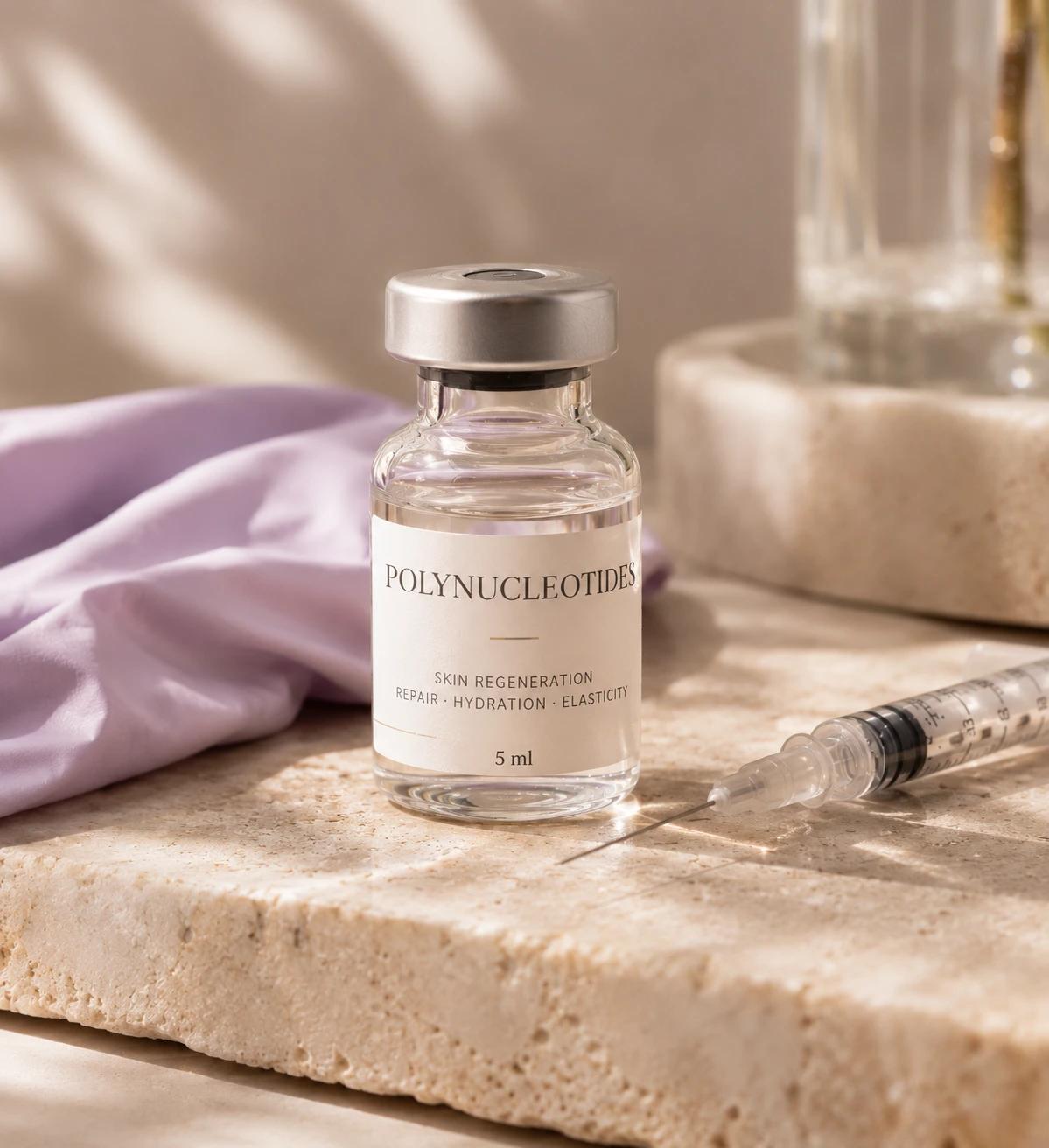
Polynucleotides have become one of the most talked-about treatments in aesthetic medicine over the past two years. On social media they are described as “salmon DNA” that “rejuvenates” skin. The reality is more nuanced, and more interesting.
What polynucleotides are
They are chains of nucleotides, usually purified from fish DNA. They were first studied in wound healing and orthopaedics. In the skin, the hypothesis is that they support hydration, fibroblast activity and an anti-inflammatory environment.
What we actually know
- Small clinical studies show improvements in elasticity and hydration, particularly around the eyes.
- Most studies have few participants and short follow-up.
- The safety profile appears good, with generally mild, temporary side effects.
What we don’t know yet
We don’t yet have large randomised studies comparing polynucleotides with other skin-quality treatments over the long term. That doesn’t mean they don’t work. It means we must be honest about how much we can promise.
This article is for information only and does not replace a medical consultation.